
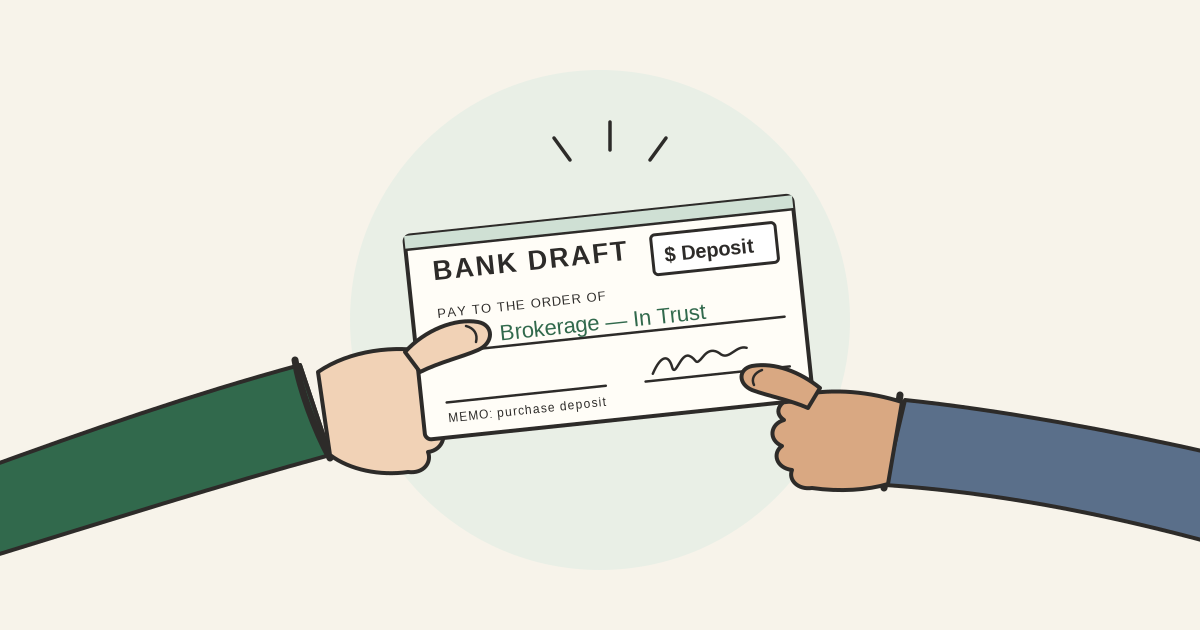
Your Deposit and Your Down Payment: How Deposits Work When Buying on the Sunshine Coast
Buyers on the Sunshine Coast often ask us the same question once their offer comes together: “Is my deposit an extra cost, or does it count toward my down payment?”
Good news: the deposit is part of your down payment. It’s the first instalment of the money you’re putting toward the purchase, paid early to show the seller you’re committed. Here is what happens to it from the day you pay it to the day you get the keys.
How the deposit counts toward your purchase
On completion, your deposit is credited to you against the purchase price. Since it comes from your own savings rather than your mortgage, your lender counts it as part of your down payment.
Example: a $750,000 home in Sechelt
- Purchase price: $750,000
- Down payment (20%): $150,000
- Mortgage: $600,000
- Deposit (5%): $37,500
The $37,500 deposit is already part of your $150,000 down payment. Before completion, you’ll provide the remaining $112,500 to your lawyer or notary, along with closing costs such as property transfer tax and legal fees. Nothing is paid twice.
👉 Related: A first-time buyer’s guide to the Sunshine Coast
When you pay the deposit
Your Contract of Purchase and Sale sets out when the deposit is due and how much it is. Both are negotiable. On most resale purchases it’s due soon after acceptance or subject removal, often within 24 hours, and around 5% of the price is common.
On the coast, subject periods can be a little longer than in the city, especially on rural properties where you may be arranging well water tests, septic inspections or insurance quotes. Many buyers pay their deposit once those subjects are removed, so plan to have the funds ready by then.
Deposits are usually paid by bank draft, certified cheque or wire transfer. If you’re buying from off the coast, a wire is often the easiest option.
⚠️ Avoid wire fraud: before sending any money, confirm the payment details by phone with someone you know at the brokerage or law office. Never rely only on emailed instructions, especially ones that change at the last minute.
Where your deposit is held
Resale homes: your deposit is normally held in the trust account of your REALTOR®’s brokerage (the buyer’s brokerage).
- The brokerage holds it as a stakeholder, meaning a neutral party rather than acting for either side.
- Trust funds are kept separate from the brokerage’s own money and are regulated by the BC Financial Services Authority (BCFSA).
- Ask for a receipt once your deposit is received.
- Interest on brokerage trust accounts isn’t paid to buyers or sellers; in BC it goes to the Real Estate Foundation of BC.
Presales and new construction: deposits for new developments are typically held in trust by the developer’s lawyer or another trustee, following BC’s Real Estate Development Marketing Act. They’re often paid in instalments. Check the disclosure statement and purchase agreement for who holds yours and on what terms.
Moving the deposit before closing
A few days before completion, your conveyancer (the lawyer or notary handling your purchase) asks the brokerage to release the deposit. The brokerage transfers it from its trust account into your conveyancer’s trust account.
Your conveyancer then gathers all the funds:
- The deposit, from the brokerage
- The balance of your down payment and closing costs, from you
- Your mortgage advance, from your lender
On completion day, your conveyancer pays the seller’s lawyer or notary and registers the transfer. The statement of adjustments they give you will show the deposit as a credit, so you can see exactly how it was applied.
Your conveyancer doesn’t need to be on the coast. Many buyers work with a lawyer or notary in Vancouver or elsewhere in BC, and much of the process can be handled remotely. It’s worth asking about signing arrangements early if you’ll be travelling on the ferry to sign.
Show your lender where it came from
Your lender will usually ask for proof of where your down payment came from, including the deposit. That normally means bank statements showing the funds in your account before you paid it, often going back a few months. If family is helping, you’ll typically need a signed gift letter too. Keeping a clear paper trail makes financing go much more smoothly.
If the purchase doesn’t go ahead
- Home Buyer Rescission Period: on most residential purchases in BC, you have three business days after acceptance to cancel by paying a fee of 0.25% of the purchase price. If the brokerage is holding your deposit, the fee is paid to the seller from it and the balance is returned to you.
- Subjects not satisfied: if your financing, inspection or another condition doesn’t work out, your deposit is normally returned once both parties sign a release.
- Failing to complete: if a buyer backs out after removing subjects, the seller may be entitled to the deposit and possibly more. Speak to a lawyer in that situation.
As a neutral stakeholder, the brokerage generally can’t release your deposit without written agreement from both buyer and seller, or a court order.
The key points
- Your deposit counts toward your down payment, not on top of it.
- For resale homes, it’s usually held in your REALTOR’s brokerage trust account.
- For presales, it’s usually held in trust by the developer’s lawyer or another trustee.
- Before closing, it moves to your lawyer’s or notary’s trust account and is applied to the price.
- Keep records showing where the money came from.
Buying on the coast?
We’re happy to walk you through the numbers, the timeline and what to expect at every step, from Gibsons to Halfmoon Bay. Get in touch anytime.
This post is general information, not legal or financial advice. Every contract is different, so confirm the details with your REALTOR®, your lawyer or notary, and your lender.